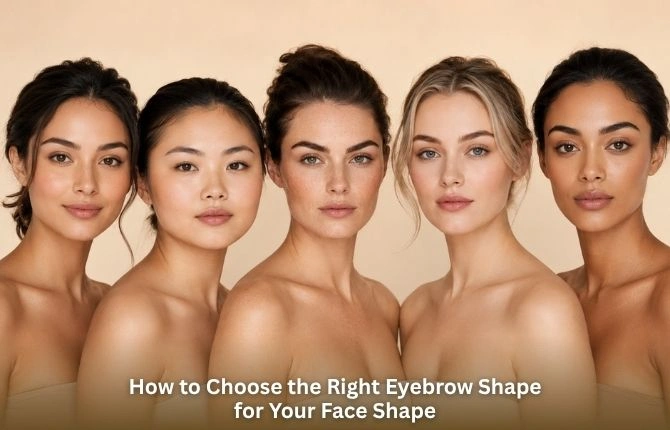
Your eyebrows can change the way your face looks by framing your eyes and adding balance to your features. Choosing a brow shape that works with your natural face shape can help create a more polished and flattering appearance.
There is no single eyebrow shape that suits everyone. Round, oval, square, heart-shaped, long, and diamond-shaped faces can each benefit from different brow styles. In this guide, we’ll explain how to identify your face shape and choose an eyebrow shape that complements your features naturally.
Why Does Eyebrow Shape Matter?
The right eyebrow shape can complement your natural features and create better balance across your face. Instead of following a trending brow style, it is better to choose a shape that works with your facial proportions.
- Frames the eyes: A well-shaped brow draws attention to the eyes and gives them a more defined appearance.
- Balances facial features: The right arch, length, and thickness can help create a more balanced look.
- Enhances natural features: A suitable brow shape works with your existing features rather than changing them completely.
- Creates a polished appearance: Well-groomed brows can make your overall look appear neat and put together.
- Supports facial symmetry: Carefully shaped brows can help create a more even appearance between both sides of the face.
The goal is not to create a completely different brow shape, but to enhance your natural brows in a way that suits your face.
Understanding the Basic Structure of an Eyebrow
Before choosing an eyebrow shape for your face, it helps to understand the three main parts of your brows. Their position, length, and arch all affect the final shape.
- Brow Head: This is the inner part of the eyebrow near the bridge of your nose. It creates the starting point of the brow and should usually look soft and natural.
- Brow Arch: The arch is the highest point of the eyebrow. Its position and height can change the overall appearance of your eyes and help balance your face shape.
- Brow Tail: This is the outer end of the eyebrow near the temple. The tail affects the length and direction of the brow and should complement the natural shape of your eyes.
When these three areas are balanced with your facial features, your brows can look more natural and well-proportioned.
How to Identify Your Face Shape

Before choosing an eyebrow shape, first determine which face shape most closely matches your features. You can do this by looking at your face in a mirror with your hair pulled away from your forehead.
- Look at your face length: Notice whether your face appears longer than it is wide or has a more balanced length and width.
- Check your forehead: Compare the width of your forehead with your cheekbones and jawline.
- Look at your cheekbones: Notice whether they are the widest part of your face or appear more balanced with the forehead and jaw.
- Observe your jawline: A rounded, soft, or defined jaw can help you identify your face shape.
- Compare your features: Look at the overall outline rather than focusing on just one area.
Common face shapes include round, oval, square, heart-shaped, long or rectangular, and diamond. Once you have a general idea of your face shape, you can choose an eyebrow style that complements your natural proportions.
Best Eyebrow Shapes for Different Face Shapes

Your face shape can help guide the overall direction, arch, and thickness of your eyebrows. While your natural brow growth should always be considered, choosing a shape that complements your facial proportions can create a more balanced and polished look.
Round Face
Round faces have softer features and gentle curves. A defined brow shape can add structure while helping create a slightly more elongated appearance.
Characteristics:
- Soft, rounded facial features
- Fuller cheeks
- Face width and length appear fairly similar
Best Eyebrow Shape: High-arched brows with a defined angle
A higher arch adds definition to the brow area and can help balance the softer appearance of a round face. It is best to keep the shape defined without making the arch overly sharp.
Tips:
- Keep the arch clearly defined
- Choose medium to fuller brows
- Extend the tail slightly
- Avoid very rounded brow shapes
Oval Face
Oval faces have naturally balanced proportions, making them suitable for several eyebrow styles. A soft shape can enhance the face without overpowering its features.
Characteristics:
- Face is slightly longer than it is wide
- Balanced facial proportions
- Gently curved jawline
Best Eyebrow Shape: Soft, natural arch
A gentle arch works well with the balanced proportions of an oval face. Following your natural brow pattern can create a polished look without making the brows appear too dramatic.
Tips:
- Follow your natural brow shape
- Keep the arch soft
- Avoid an excessively high arch
- Maintain balanced brow thickness
Square Face
A square face often has stronger angles and a more defined jawline. A softer eyebrow shape can help create visual balance between the brows and other facial features.
Characteristics:
- Strong or defined jawline
- Wider forehead
- Angular facial features
Best Eyebrow Shape: Softly curved or gently arched brows
A soft curve can complement the stronger structure of a square face. It adds a touch of softness while keeping the brows defined and well-shaped.
Tips:
- Choose a gentle arch
- Keep brows medium to full
- Avoid very thin brows
- Keep the edges soft and natural
Heart-Shaped Face
Heart-shaped faces are generally wider around the forehead and narrower toward the chin. A soft brow shape can help create balance without adding too much emphasis to the upper face.
Characteristics:
- Wider forehead
- Prominent cheekbones
- Narrower chin
Best Eyebrow Shape: Soft, rounded arch
A rounded arch can soften the brow area and complement the natural shape of a heart-shaped face. Keeping the arch subtle helps maintain a balanced appearance.
Tips:
- Choose a soft, gentle arch
- Keep the brows naturally full
- Avoid very sharp peaks
- Avoid extending the tail too far downward
Long or Rectangular Face
Long or rectangular faces have more length than width. A flatter brow can help create visual width and bring better balance to the overall face.
Characteristics:
- Face is noticeably longer than it is wide
- Straighter cheek lines
- Longer facial proportions
Best Eyebrow Shape: Flat or low-arched brows
A flatter brow creates a more horizontal appearance, which can help balance the length of the face. Very high arches may add unnecessary height.
Tips:
- Keep the brow relatively horizontal
- Choose a low or subtle arch
- Avoid very high arches
- Maintain a balanced brow length
Diamond Face
Diamond-shaped faces usually have wider cheekbones with a narrower forehead and jawline. A curved brow can help soften the more defined angles of this face shape.
Characteristics:
- Wider cheekbones
- Narrower forehead and jawline
- More angular facial structure
Best Eyebrow Shape: Curved or softly arched brows
A smooth, soft curve can complement the angles of a diamond-shaped face and bring more attention toward the eyes without creating a harsh appearance.
Tips:
- Choose a smooth, curved arch
- Avoid dramatic peaks
- Keep brows medium in thickness
- Follow your natural brow direction
How to Choose the Right Eyebrow Thickness

Eyebrow thickness is just as important as the overall brow shape. The ideal width should complement your facial features and natural brow growth rather than simply following current trends.
- Delicate facial features: Medium or slightly thinner brows can create a balanced appearance without making the brows look too heavy.
- Strong facial features: Fuller brows can work well with more defined features and help maintain overall facial balance.
- Smaller faces: Avoid brows that are extremely thick, as they may overpower your facial features.
- Larger faces: Slightly fuller brows can provide better proportion and help frame the face.
- Naturally sparse brows: Focus on creating a balanced shape rather than trying to make the brows excessively thick.
- Naturally full brows: Keep the natural fullness while cleaning and defining the shape instead of removing too much hair.
The goal is to find a brow thickness that looks natural and works with your face shape, eye area, and existing brow growth.
Common Eyebrow Shaping Mistakes to Avoid
Getting the right eyebrow shape is not only about choosing a style that suits your face. How the brows are shaped and maintained also affects the final result. Avoiding common mistakes can help keep your brows looking natural and balanced.
- Over-plucking: Removing too much hair can make the brows look overly thin and may make it difficult to maintain their natural shape.
- Choosing an unsuitable arch: A very high or sharp arch may not complement every face shape. The arch should work with your natural features.
- Making brows too dark: Extremely dark or heavily filled brows can look harsh. Choose a shade that works naturally with your hair and overall appearance.
- Ignoring natural brow growth: Trying to force your brows into a completely different shape can make them look unnatural. Work with the direction and pattern of your existing hair.
- Making the tail too long: An overly extended tail can make the eyes appear lower or tired. Keep the tail proportionate to your brow and eye shape.
- Making both brows overly identical: Brows naturally have small differences. Trying to make them perfectly identical can result in unnecessary hair removal.
A good brow shape should enhance your natural features rather than completely change them. When you’re unsure about the right shape, professional brow shaping can help create a more balanced result.
Frequently Asked Questions
How do I know which eyebrow shape suits my face?
Start by identifying your overall face shape and then consider your natural brow growth, arch, length, and thickness. A professional brow consultation can also help you choose a shape that complements your features.
What eyebrow shape is best for a round face?
A defined, higher arch can add structure and create the appearance of more length. Avoiding overly rounded brows can also help maintain balance.
What eyebrow shape suits an oval face?
Oval faces have balanced proportions, so a soft, natural arch is usually a good choice. Following the natural brow shape can help keep the result proportional.
Should eyebrow thickness depend on face shape?
Yes. Brow thickness should complement your facial proportions. Fuller brows can suit stronger features, while medium or slightly thinner brows may work better with delicate features.
How often should I get my eyebrows shaped?
There is no fixed schedule for everyone. Brow growth varies, so shaping can be done when unwanted hairs become noticeable. Professional maintenance can help preserve the desired shape without over-plucking.
Conclusion
Choosing the right eyebrow shape is about more than following the latest brow trend. Your face shape, natural brow growth, thickness, and facial features all play a role in creating a balanced and flattering look.
Whether you have a round, oval, square, heart-shaped, long, or diamond face, the goal is to work with your natural features rather than completely change them. If you’re unsure which shape will suit you best, book an appointment with a professional brow specialist who can help create a shape that complements your face.

